













Macavity Arms MA3


€400.00
The Macavity Arms MA3 gives you a PCP air rifle with a good looking beech wood stock for a traditional look and feel and comfortable control, plus an externally adjustable regulator with an easy to use adjustment dial for steady performance. You’ll appreciate that you get precise shots thanks to the MSR barrel for the performance you need for pesting, target shooting, and small game hunting.
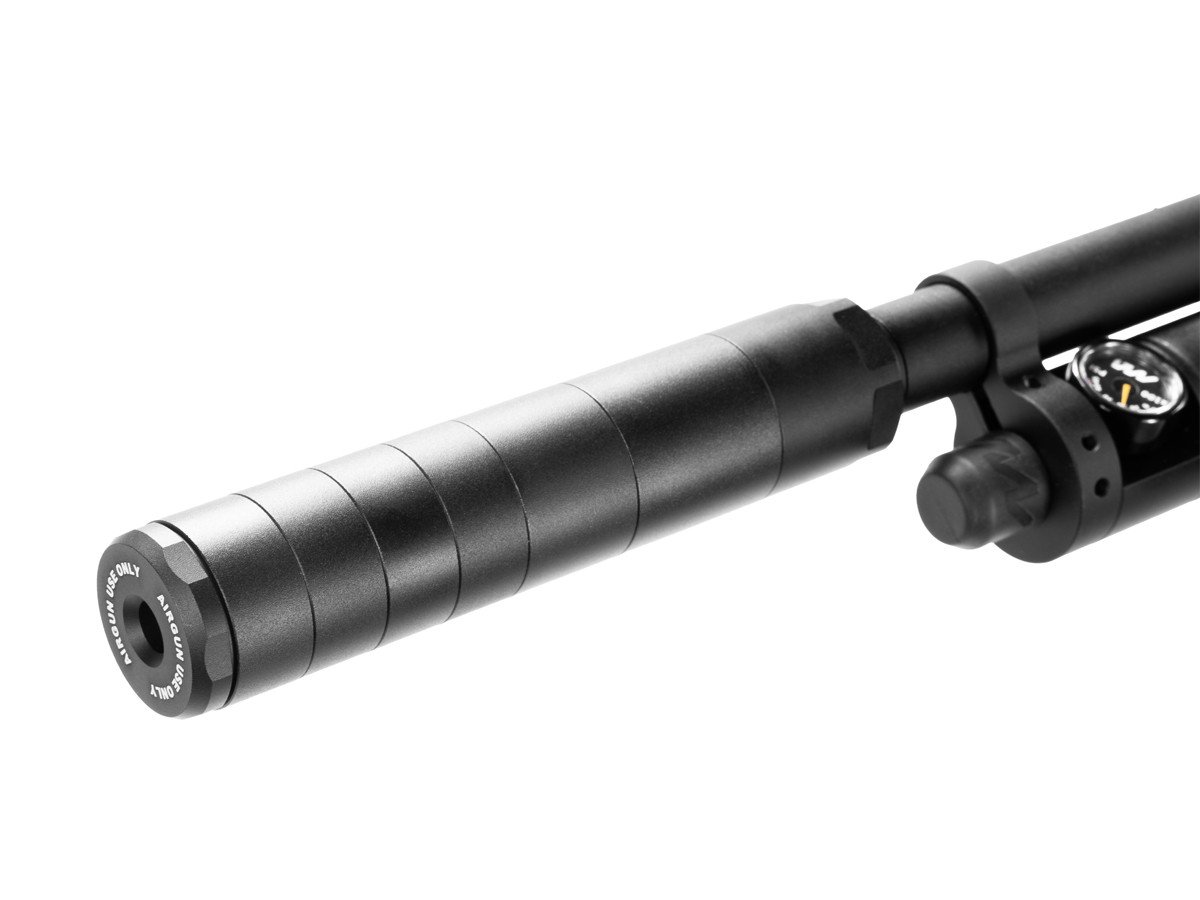
You’ll like how precise your shots are with this rifle thanks to the MSR (Master Select Rifling) barrel that’s tensioned, choked, rifled, and shrouded, with consistent rifling and smooth interior finishing that gives you reliable engagement with your ammo. You’ll also enjoy that you can personalize the balance and noise reduction of your airgun because of the modular baffled moderator that has multiple sections so you can also change the length, and a 1/2-20 UNF threaded muzzle to give you added options.
The Macavity MA3 gives you the ability to tune performance for the best precision with different ammo for specific uses because you get an externally adjustable regulator with an adjustment dial, so you get steady performance you can count on. Plus, you’ll get consistent pressure behind each shot even with fast follow up shots because the regulator chamber has been increased to 55cc.
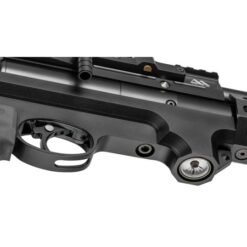
For precision aiming, you get a Picatinny scope rail, and you also get an M-LOK rail under the forearm so you can add items like bipods, sling adapters, and more to enhance your shooting experience. You’ll also get a comfortable and slip free hold because of the checkered grip and rubber buttpad on the beech stock.
Macavity Arms MA3 Features:
- Sidelever cocking
- Externally adjustable regulator
- PCP
- MSR (Master Select Rifling) barrel is rifled, choked, tensioned, and shrouded
- 1/2-20 UNF threaded muzzle
- Includes modular baffled moderator
- Beech thumbhole stock
- Upgraded 55cc regulator chamber
- 188cc air cylinder (Standard), 265cc (Long)
- 3,625 psi/250 bar max. fill pressure
- Magazine capacity: 11 rounds (.22), 10 rounds (.25), 8 rounds (.30)
- 2-stage adjustable trigger
- Checkered grip
- Rubber buttpad
- Picatinny/Weaver scope rail
- M-LOK bottom rail
- Dual gauges for regulator and reservoir pressure
- Manual safety
- Quick-disconnect sling mount in rear of stock
- Includes 3 rotary magazines
- Barrel length: 18″ (Standard), 22″ (Long)
- Overall length: 36.9″ (Standard), 40.9″ (Long)
- Weight: 7.2 lbs. (Standard), 7.6 lbs. (Long)
- 3-year limited warranty
Specs
- ManufacturerMacavity Arms
- Caliber .22
- Velocity 870 fps
- Condition New
- Ammo Type Pellets
- Action Sidelever
- Barrel Style Rifled
- Fire Mode Repeater
- Gun Weight 7.60
- Loudness 3-Medium
- Magazine Capacity 11
- Mechanism Pre-charged pneumatic
- Rail Weaver/Picatinny
- Safety Manual
- Front Sights none
- Rear Sights none
- Trigger Adjustability Two-stage adjustable
- Use Small game hunting/target practice
- Warranty 3-year limited warranty
- Upgrades Standard
Macavity Arms MA3 – Precision Engineering Meets Tactical Performance
Design Philosophy and Structural Engineering
The Macavity Arms MA3 is defined by a design philosophy that prioritizes precision, balance, and durability. Rather than focusing on a single feature, the platform has been engineered as a cohesive system where each component contributes to overall performance. As a result, users experience a product that feels both refined and reliable.
To begin with, the structural framework of the MA3 has been carefully developed to ensure stability during operation. A stable platform is essential for maintaining consistency, especially in performance-focused applications. Because of this, the design minimizes unnecessary movement and enhances control. Consequently, users can achieve more predictable results.
Moreover, the materials used in construction play a significant role in defining the platform’s durability. High-strength components have been selected to resist wear and environmental stress. In addition, these materials maintain their integrity over time, which supports long-term reliability. Therefore, the MA3 remains dependable even after extended use.
Another important aspect of the design is weight distribution. Instead of concentrating weight in a single area, the platform has been balanced to improve handling. Because of this, users experience better control and reduced fatigue. This balance is particularly beneficial during prolonged sessions.
Furthermore, the external structure has been shaped to support ergonomic handling. The contours and layout have been designed to align naturally with the user’s grip and posture. As a result, the platform feels intuitive and comfortable to use. This ergonomic approach enhances both performance and user experience.
In addition, the design incorporates a modular approach that allows for adaptability. While the core structure remains consistent, the platform can accommodate different configurations depending on user preference. Because of this, it becomes more versatile and suitable for a variety of applications.
Transitioning to precision engineering, the MA3 has been developed with tight tolerances to ensure consistent operation. When components fit together accurately, friction is reduced, and efficiency improves. Consequently, the platform performs smoothly and reliably.
Another advantage lies in the integration of internal systems. Instead of functioning independently, components have been designed to operate in harmony. Because of this integration, performance remains stable across different conditions. This cohesion is a key factor in delivering a dependable experience.
Moreover, the platform has been engineered to minimize external interference. Environmental factors such as dust or minor impacts can affect performance in poorly designed systems. However, the MA3 addresses these concerns through its robust construction. As a result, it maintains consistent functionality.
At the same time, the design supports ease of use. While the engineering is advanced, the user interface remains straightforward. Because of this, both new and experienced users can operate the platform effectively. This simplicity enhances accessibility without compromising performance.
Another critical consideration is long-term reliability. A well-designed platform should maintain its performance over time. The MA3 achieves this through durable materials and precise construction. Consequently, users can rely on it for consistent results.
In addition, the structural integrity contributes to overall safety. When a platform is built with strong materials and accurate alignment, the risk of failure is reduced. Therefore, users can operate with greater confidence.
Furthermore, the attention to detail in the design process ensures that each component serves a purpose. Instead of adding unnecessary complexity, the platform focuses on efficiency and functionality. Because of this, it delivers a streamlined and effective experience.
Another benefit of the design is its adaptability to different environments. Whether used in controlled settings or more demanding conditions, the MA3 maintains its performance. This versatility increases its overall value.
Additionally, the balanced construction supports consistent handling. When a platform feels stable, users can focus more on performance and less on managing the equipment. As a result, accuracy and efficiency improve.
At the same time, the refined design enhances user confidence. A well-built platform provides a sense of reliability that encourages better performance. Because of this, users are more likely to achieve consistent results.
Performance, Precision, and System Consistency
Performance is the defining factor that separates a standard platform from a truly refined system, and the Macavity Arms MA3 has been engineered to deliver consistent, controlled, and reliable output across every stage of use. While design and build quality establish the foundation, it is precision and repeatability that ultimately define long-term value. As a result, the MA3 focuses heavily on system consistency and performance stability.
To begin with, precision is achieved through the alignment of internal components. When each element operates within tight tolerances, the overall system performs more efficiently. Because of this, the MA3 delivers predictable results with minimal variation. Consequently, users can rely on consistent output regardless of usage conditions.
Moreover, system consistency is reinforced by the integration of all moving and static components. Instead of functioning independently, each part contributes to a unified operational flow. As a result, performance feels smooth and uninterrupted. This level of cohesion enhances reliability and reduces inconsistencies that are often found in less refined systems.
In addition, the platform has been designed to minimize unnecessary mechanical disturbance. Excessive internal movement can negatively impact performance by introducing variability. However, this system has been optimized to reduce such disruptions. Therefore, users benefit from a more stable and controlled experience.
Another important factor is repeatability. A high-performance platform must deliver the same level of output over multiple cycles. Because of this requirement, the MA3 has been engineered to maintain consistency over time. Consequently, users can achieve reliable results without needing constant adjustments.
Furthermore, the system has been calibrated to ensure balanced performance. Instead of prioritizing one aspect at the expense of another, the platform maintains equilibrium between power, control, and stability. As a result, the overall experience remains well-rounded and dependable.
Transitioning to user control, the MA3 supports precise input through its responsive design. When a system reacts accurately to user actions, performance improves significantly. Because of this responsiveness, users can make fine adjustments with confidence. This control is essential for achieving consistent results.
Additionally, the internal efficiency of the system contributes to performance stability. When energy transfer is optimized, output remains steady across repeated use. As a result, fluctuations are minimized, and consistency is preserved. This efficiency is a key factor in maintaining precision.
Another advantage lies in the reduction of performance degradation over time. Some systems experience a decline in output as components wear down. However, the MA3 has been engineered to resist such issues. Because of this, it maintains reliable performance even after extended use.
Moreover, environmental adaptability plays a role in system consistency. External factors such as temperature or minor physical stress can affect performance in some platforms. However, this system has been designed to remain stable under varying conditions. Consequently, users experience fewer disruptions.
In addition, the platform supports a controlled operational rhythm. When performance remains predictable, users can develop a consistent workflow. Because of this, efficiency improves, and the overall experience becomes more streamlined.
Another key element is the reduction of variability between cycles. Consistency is not only about individual performance but also about maintaining uniformity across repeated use. The MA3 addresses this by ensuring that each cycle operates under similar conditions. As a result, output remains stable.
Furthermore, the system has been engineered to support long-term reliability without requiring frequent recalibration. Because of this, users can focus on performance rather than maintenance. This simplicity enhances usability and efficiency.
At the same time, the platform’s design encourages proper technique. When a system is predictable and stable, users can refine their approach more effectively. Consequently, performance improves over time.
Another benefit is the confidence that comes from consistent results. When users know what to expect from a system, they can operate with greater precision. Because of this, the overall experience becomes more controlled and satisfying.
Additionally, the integration of precision engineering and system efficiency ensures that performance remains consistent across different scenarios. Whether used in controlled environments or more dynamic situations, the MA3 maintains its reliability. This adaptability increases its overall value.
Moreover, the platform’s ability to deliver stable output enhances its suitability for performance-focused applications. Because of this, it appeals to users who prioritize accuracy and repeatability.
In addition, the system has been designed to reduce the likelihood of operational errors. When components function smoothly and predictably, the risk of malfunction decreases. As a result, users experience fewer interruptions.
Another important consideration is how the platform maintains performance under continuous use. Extended operation can expose weaknesses in poorly designed systems. However, the MA3 has been built to handle sustained use without significant performance loss. Consequently, it remains dependable over time.
Ergonomics, Handling, and User Interface Efficiency macavity arms ma3 rifle macavity arm ma3
While performance and precision define capability, ergonomics ultimately determine how effectively a user can apply that capability in real-world situations. The Macavity Arms MA3 has been developed with a strong focus on handling comfort, intuitive control, and user-centered design. As a result, it delivers an experience that feels both natural and efficient during operation.
To begin with, the overall structure has been shaped to align with natural hand positioning. When a platform fits comfortably within the user’s grip, control improves significantly. Because of this, the MA3 reduces strain during extended use. Consequently, users can maintain steady handling without experiencing unnecessary fatigue.
Moreover, the grip design plays a central role in enhancing stability. A secure hold is essential for maintaining control, especially during precision-focused tasks. Therefore, the surface texture and contouring have been optimized to prevent slippage. As a result, the platform remains stable even under continuous use.
In addition, weight distribution has been carefully balanced to support ease of handling. Instead of placing excessive weight in one area, the system has been designed for equilibrium. Because of this, users experience improved control and reduced arm fatigue. This balance becomes particularly beneficial during prolonged sessions macavity arms ma3.
Another important aspect is the accessibility of controls. The layout has been engineered so that key functions can be reached without disrupting the user’s grip. As a result, transitions between actions feel seamless. This intuitive arrangement enhances operational efficiency and reduces unnecessary movement macavity arms ma3.
Furthermore, the ergonomic structure supports consistent positioning. When a user can maintain the same grip and posture, performance becomes more predictable. Because of this, the MA3 encourages repeatable handling techniques. This consistency directly contributes to improved accuracy and reliability macavity arms ma3.
Transitioning to interface simplicity, the platform avoids unnecessary complexity. While advanced engineering is present internally, the user interface remains straightforward. Because of this, both beginners and experienced users can operate the system effectively. This simplicity enhances usability without compromising functionality.
Additionally, the responsiveness of the system contributes to a more controlled experience. When user input is translated into action without delay, performance improves. As a result, the MA3 feels precise and reliable during operation. This responsiveness is essential for maintaining confidence macavity arms ma3.
Another advantage lies in the adaptability of the design. The platform accommodates different user preferences by providing a versatile interface. Because of this, it can be used comfortably by individuals with varying levels of experience. This flexibility increases its overall accessibility macavity arms ma3.
Moreover, the structural design supports proper posture during use. When a platform encourages correct alignment, strain on the body is reduced. As a result, users can operate more efficiently over longer periods. This ergonomic benefit enhances both comfort and performance macavity arms ma3.
In addition, the compact and streamlined form contributes to maneuverability. A well-designed structure allows for easier positioning and adjustment. Because of this, users can respond quickly to changing conditions. This adaptability improves overall handling efficiency macavity arms ma3.
Another key factor is the reduction of unnecessary movement. When controls are positioned logically, users do not need to shift their grip frequently. Consequently, stability is maintained throughout operation. This stability is essential for achieving consistent results macavity arms ma3.
Furthermore, the design promotes a natural workflow. Instead of requiring users to adapt to the system, the system adapts to the user. Because of this, the learning curve is reduced. As a result, users can become proficient more quickl macavity arms ma3 y.
At the same time, the platform’s ergonomic features enhance confidence. When a system feels comfortable and predictable, users are more likely to trust their actions. This confidence leads to smoother operation and improved outcomes macavity arms ma3.
Another benefit is the reduction of fatigue during extended use. Ergonomic design minimizes strain on the hands and arms. Because of this, users can maintain performance over longer periods without discomfort. This endurance is particularly valuable in demanding scenarios macavity arms ma3.
Additionally, the consistent handling characteristics ensure that performance does not fluctuate. When a platform behaves predictably, users can focus on execution rather than adjustment. Consequently, efficiency and accuracy improve.
Moreover, the integration of ergonomic design with system responsiveness creates a cohesive experience. Each element supports the others, resulting in smooth and controlled operation. This harmony between design and function is a key strength of the MA3.
In addition, the platform’s intuitive layout reduces the likelihood of user error. When controls are easy to understand and operate, mistakes are minimized. As a result, the overall experience becomes more reliable.
Another important consideration is long-term usability. A well-designed ergonomic system should remain comfortable over time. The MA3 achieves this by maintaining consistent handling characteristics. Because of this, users can rely on a stable experience even after extended use macavity arms ma3.
Durability, Reliability, and Long-Term Performance Value macavity arms ma3 air rifle arm air rifle
Durability and long-term reliability are critical factors in evaluating any high-performance platform, and the Macavity Arms MA3 has been engineered to excel in both areas. While initial performance may attract attention, sustained consistency ultimately determines real value. For this reason, the MA3 has been developed with a strong emphasis on structural strength macavity arms ma3, operational stability, and long-term efficiency macavity arms ma3.
To begin with, the overall construction reflects a commitment to robust engineering. High-quality materials have been selected to ensure that the platform withstands regular use without degradation. Because of this, structural integrity is maintained over time. As a result, users can rely on consistent performance even after extended operation.
Moreover, the external framework has been designed to resist environmental stress. Factors such as moisture, temperature fluctuations, and physical impact can affect lower-quality systems. However, the MA3 addresses these challenges through durable construction. Consequently, it remains stable in a variety of conditions macavity arms ma3.
In addition, the internal components have been engineered with precision to reduce wear macavity arms ma3. When parts are aligned accurately, friction is minimized, which improves efficiency. Because of this, the system operates smoothly over time macavity arms ma3. This reduction in internal stress contributes directly to long-term reliability macavity arms ma3.
Another important factor is the consistency of performance under repeated use. A platform that performs well initially but declines quickly does not provide lasting value. However, the MA3 has been designed to maintain stable output across multiple cycles. macavity arms ma3 As a result, users experience predictable results with each use macavity arms ma3.
Furthermore, the integration of components enhances reliability. Instead of functioning as separate elements, each part works cohesively within the system. Because of this integration, performance remains consistent and interruptions are minimized. This unified design approach supports long-term stability macavity arms ma3.
Transitioning to maintenance, the MA3 has been developed with efficiency in mind. A durable platform should not require excessive upkeep to remain functional. Fortunately, this system has been designed to operate reliably with minimal maintenance. As a result, users can focus more on performance rather than constant adjustments.
Be the first to review “Macavity Arms MA3”
Related products
Air Arms


Air Arms






Reviews
There are no reviews yet.