
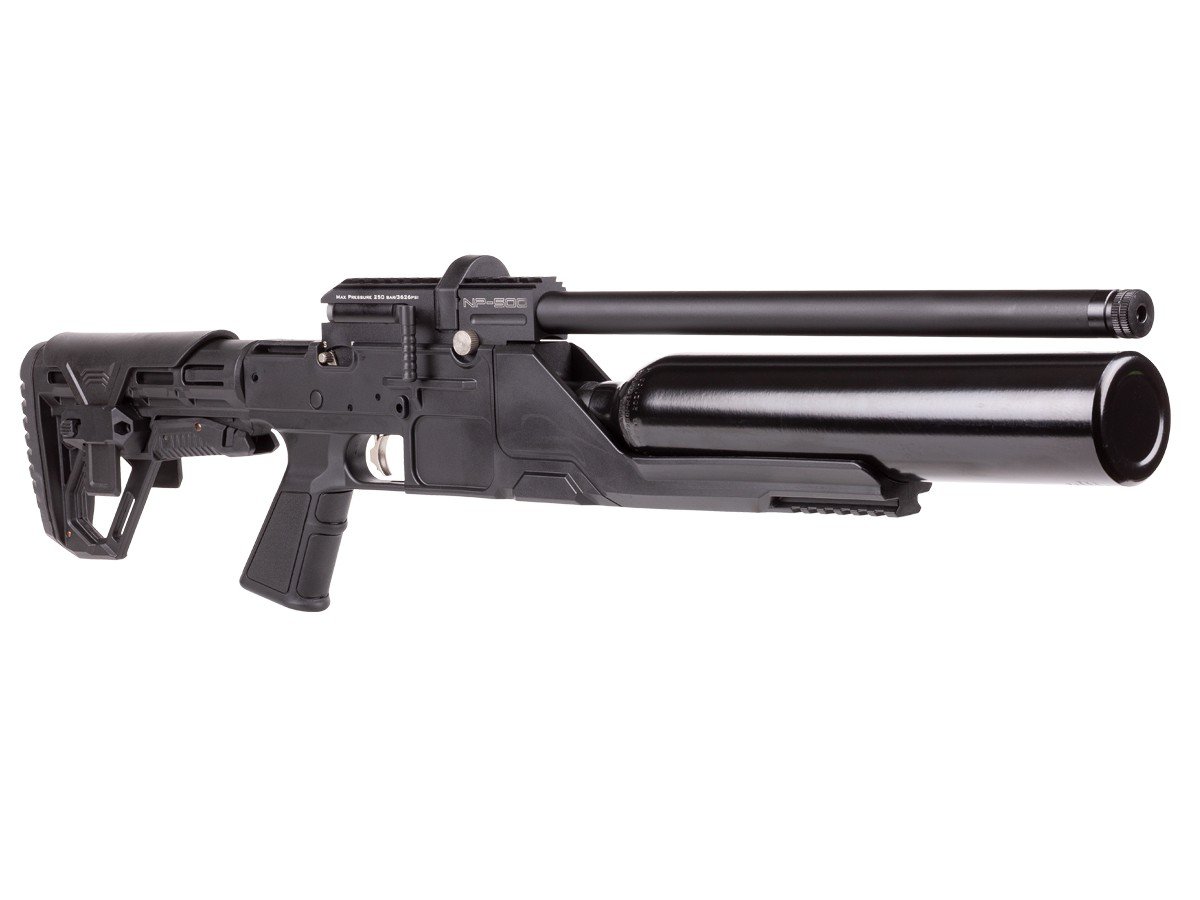
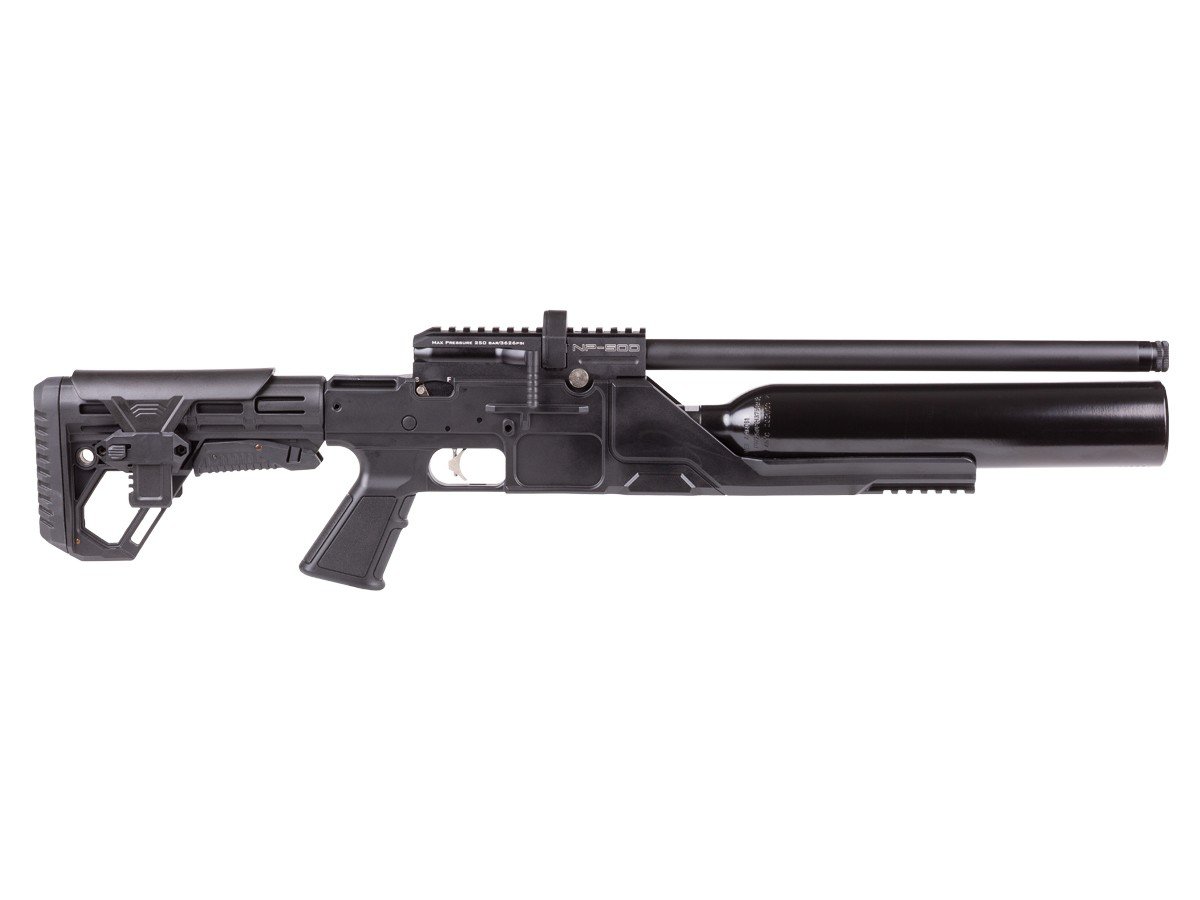
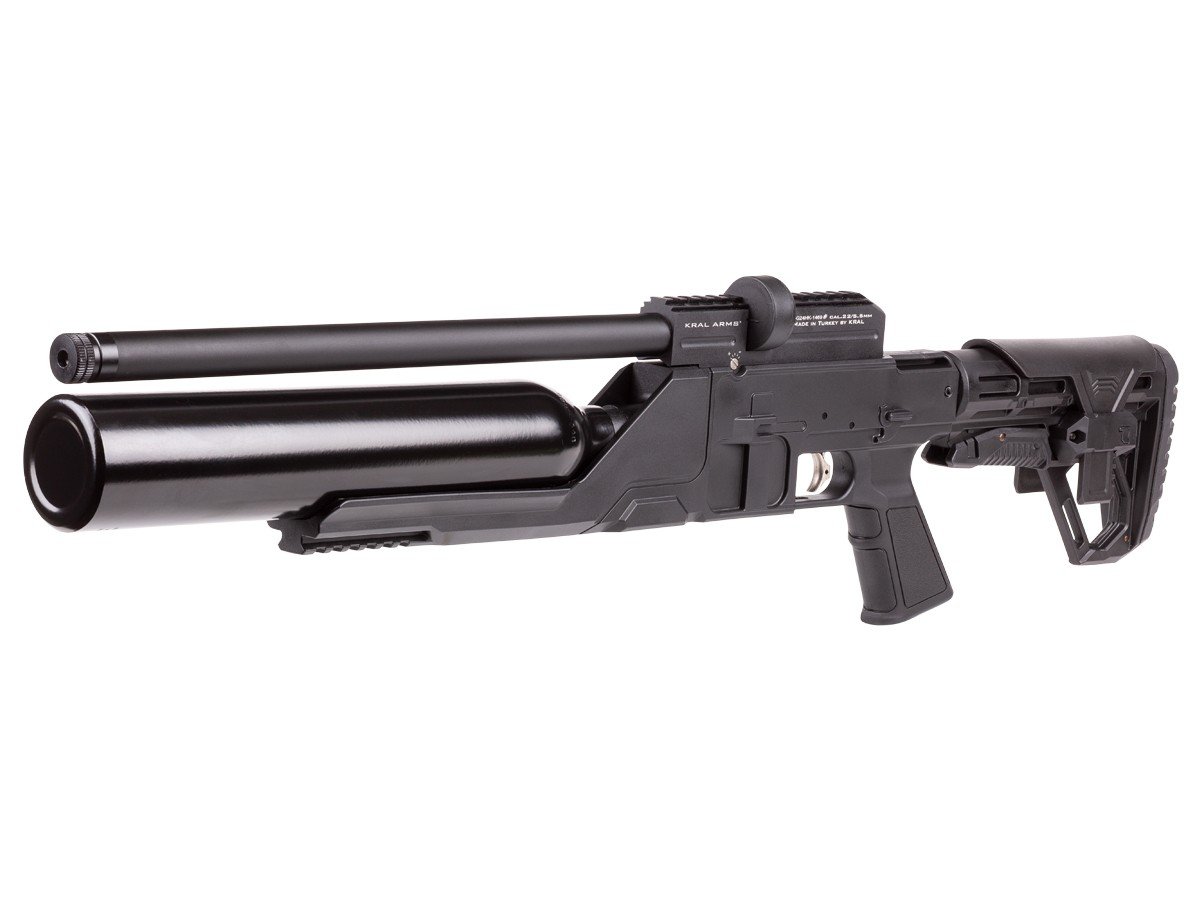
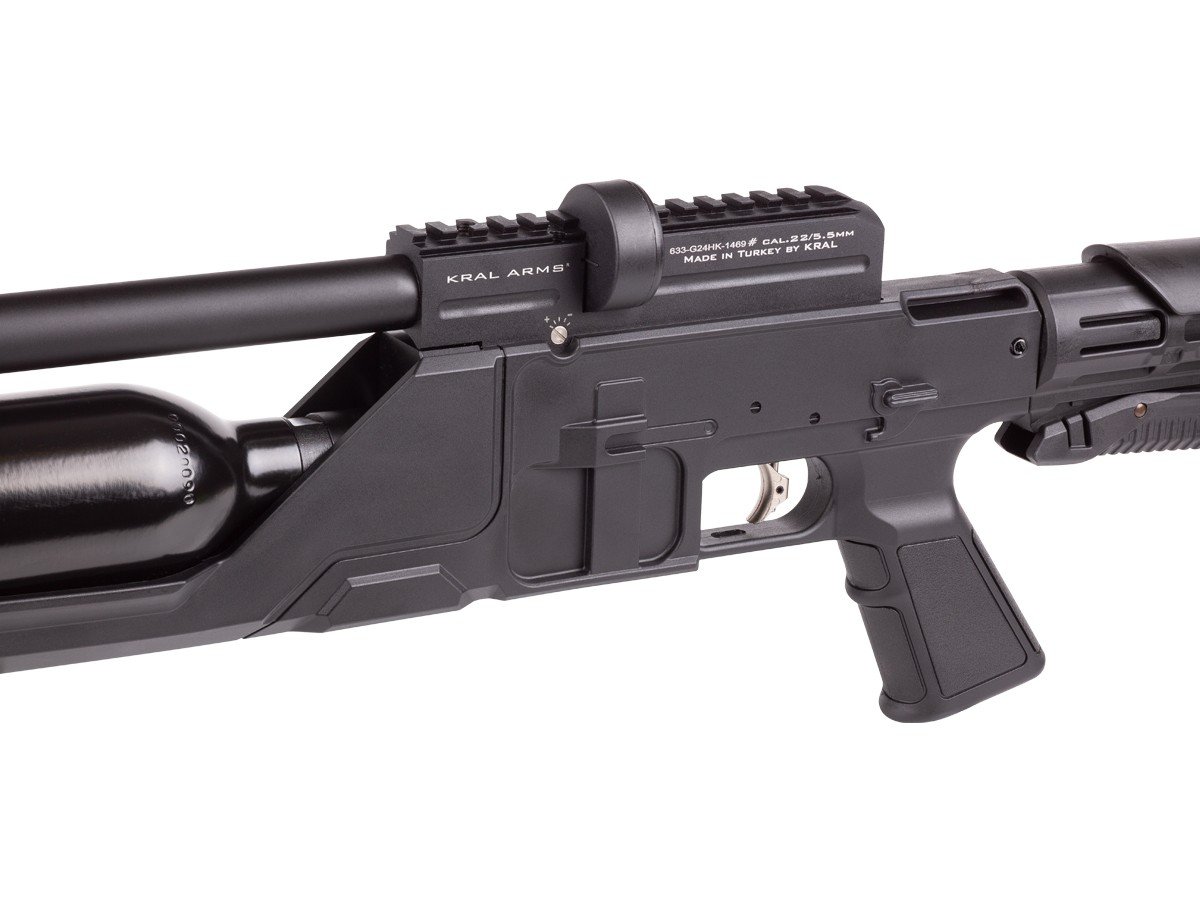

Kral Arms Puncher NP 500
€235.00
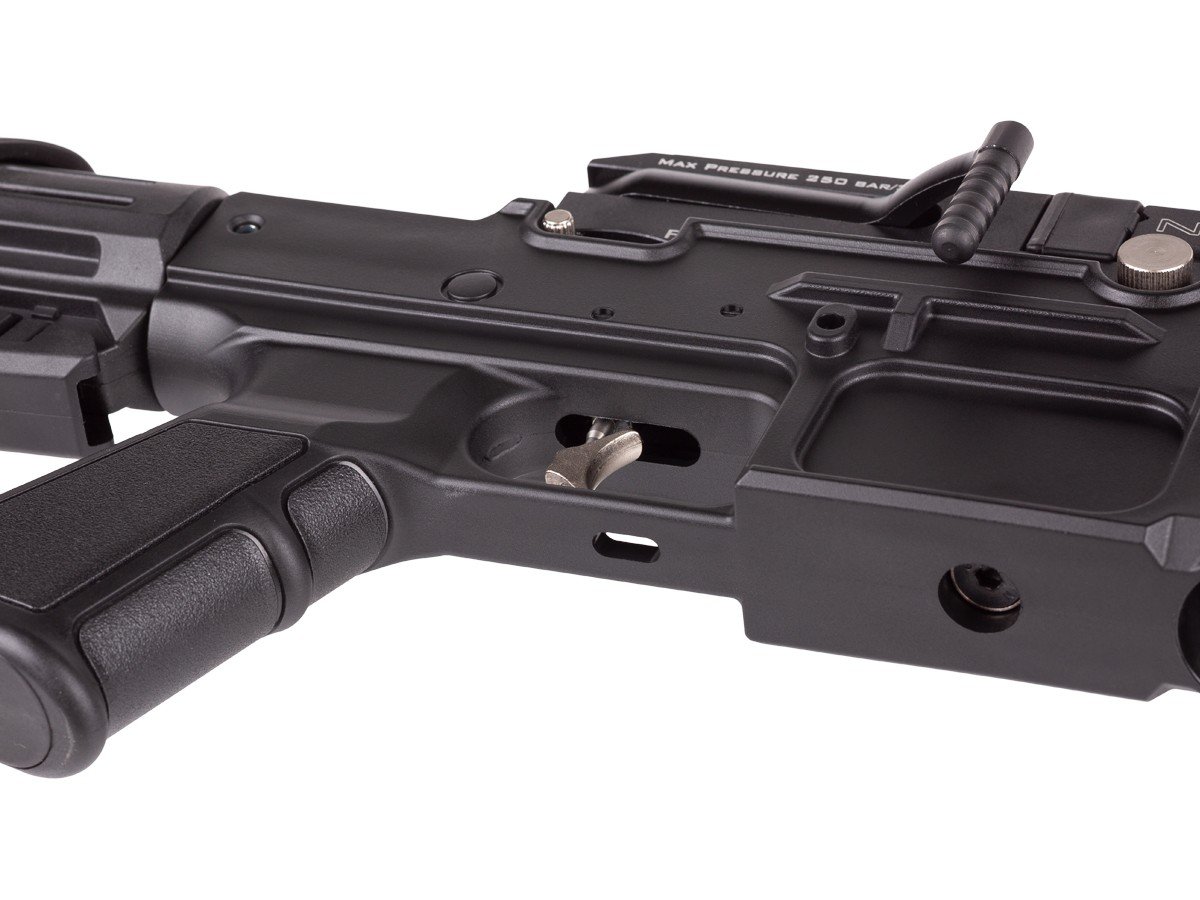
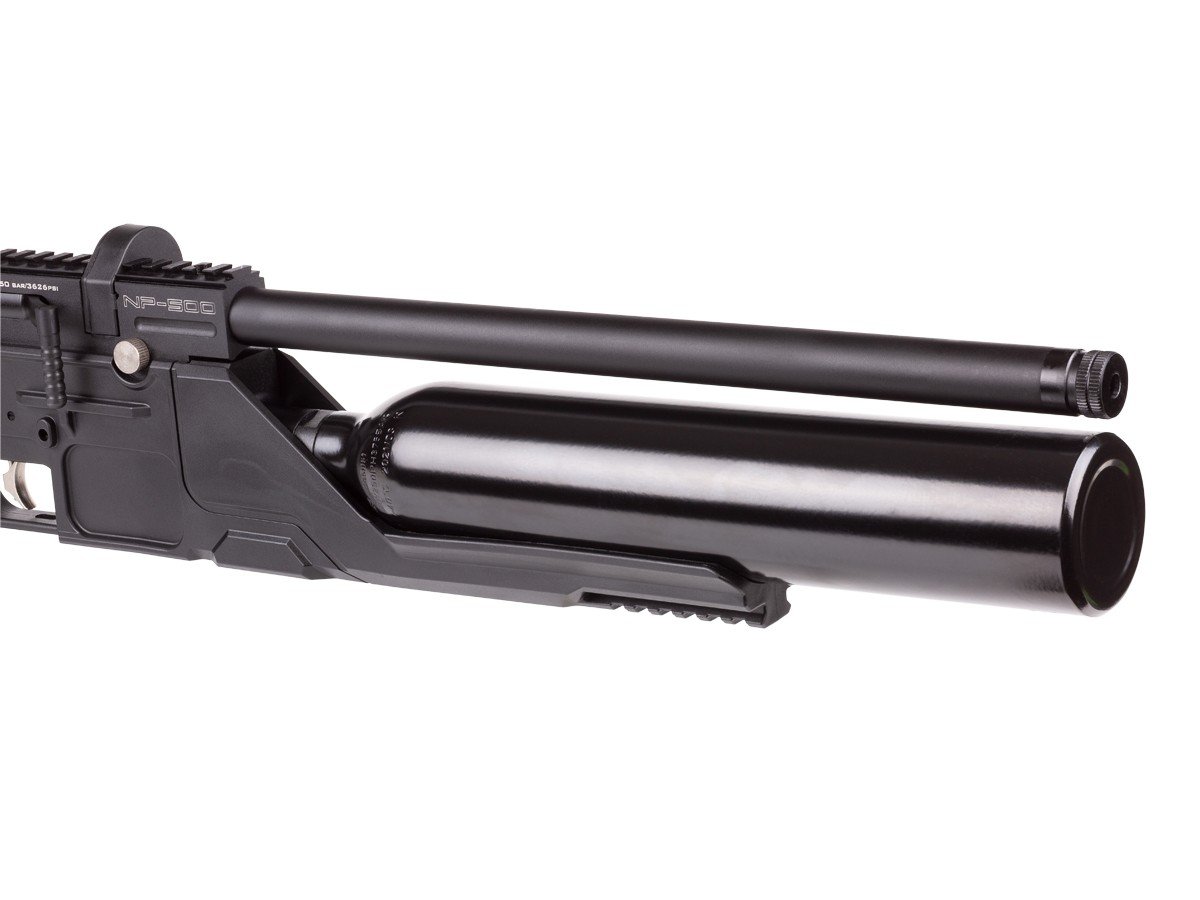
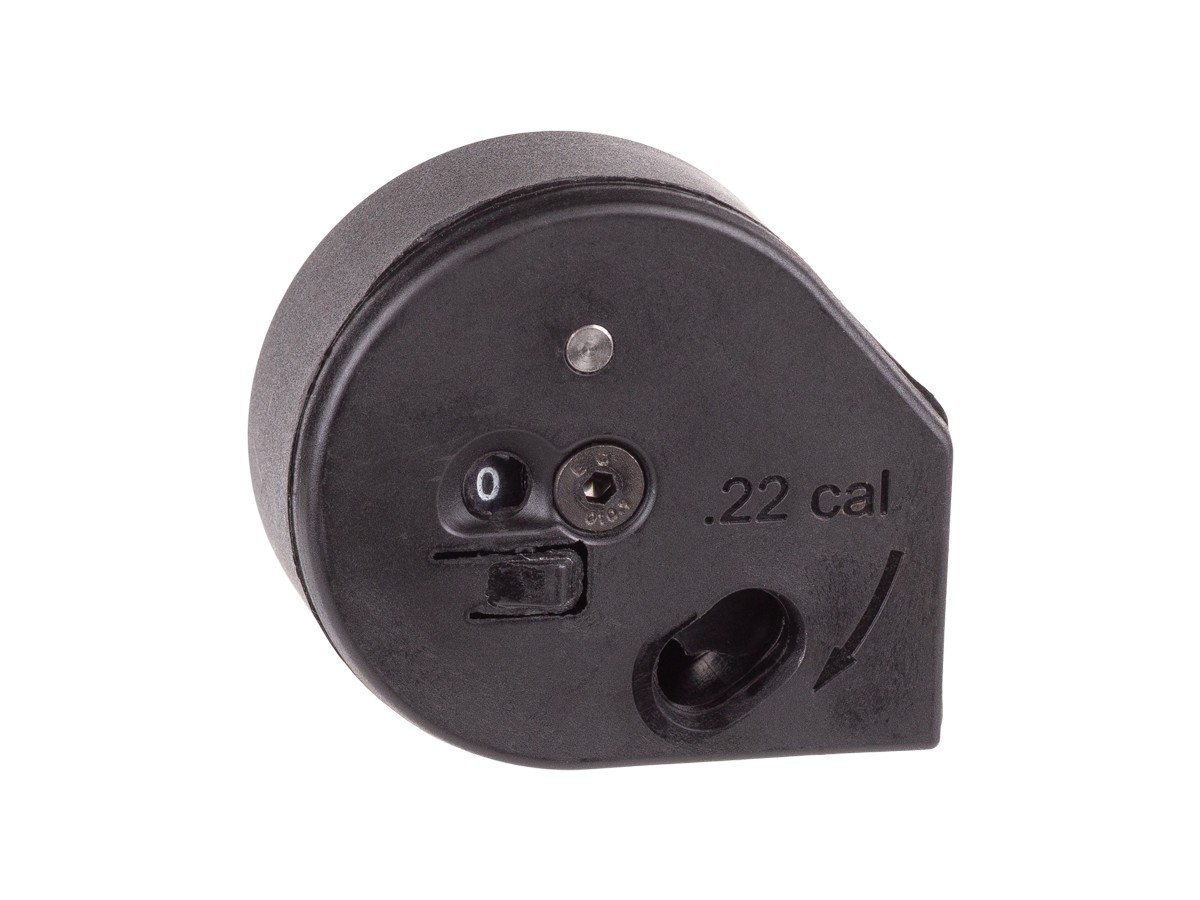
Check out the Kral Puncher NP 500 as an affordable entry into the wonderful world of PCP airguns. This air rifle comes in either .22 or .25 caliber and has a 500cc air tube with 3,625 PSI. It’s capable of shooting 144 shots in .22 or 120 in .25 cal with a magazine capacity of 12 or 10 rounds, respectively. You can attach your choice of sound moderator or muzzle device thanks to the 1/2″ UNF threads.
It boasts a shrouded 16” rifled barrel and a bottom accessory rail for a bipod or other accessory. It tips the scale at 8.15 lbs with an overall length of 30.3 inches. This side lever-action pellet rifle launches .22 caliber pellets to 900 FPS (820 FPS for the .25 cal model) with an adjustable power output.
Kral Arms Puncher NP 500.
- Available in .22 or .25 caliber
- Length: 30.3″-33.75″
- Weight: 8.15 lbs
- Barrel: 16″ rifled barrel
- Length of pull: 14.3″-17.75″
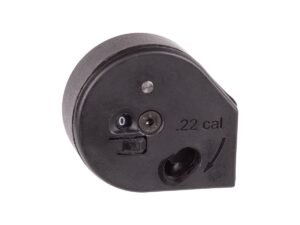
- Magazine capacity: 12 shots (.22), 10 shots (.25)
- 1/2″ UNF muzzle threads.
- Air tube capacity: 500cc
- Max fill pressure: 3,625 PSI / 250 BAR
- Max velocity: 900 FPS (.22), 820 FPS (.25)
- Max power: 32 FPE (.22), 38 FPE (.25)
- Max shots per fill: 144 (.22), 120 (.25)
- Side-lever action
- Adjustable power
- Adjustable trigger
- Manual safety
- Shrouded barrel
- 11mm dovetail and 22mm Weaver rail for optics mounting
- Includes two magazines, fill adapter, and case
Description
Kral Arms Puncher NP 500 – Technical Overview, PCP System Design, and Responsible Use Guide .22 PCP air rifle
Introduction to the Kral Arms Puncher NP 500 PCP Platform
The Kral Arms Puncher NP 500 represents a structured implementation of pre-charged pneumatic (PCP) system design, where compressed air propulsion is combined with a practical mechanical framework. This type of system has been developed to deliver controlled and repeatable performance while maintaining reliability across various conditions. As a result, it demonstrates how PCP platforms can balance efficiency and usability within a consistent operational structure.
To begin with, PCP systems operate by storing compressed air within a high-pressure reservoir. This air is released in measured quantities when the trigger mechanism is engaged. Consequently, projectile propulsion is achieved through controlled air pressure rather than mechanical spring force or gas cartridge expansion. Because of this design, smoother operation and reduced recoil are typically observed.
In addition, the air reservoir serves as the primary energy source. It is filled using external equipment such as a hand pump or a compressed air cylinder. Once pressurized, it supplies air for multiple operational cycles. Therefore, repeated use can be achieved without frequent interruption. This feature contributes to operational efficiency and continuity.
Moreover, pressure management plays a critical role in maintaining consistent performance. Many PCP systems incorporate regulators that stabilize air delivery regardless of reservoir pressure fluctuations. As a result, variation between cycles is reduced, and a more predictable output profile is achieved. However, as reservoir pressure decreases, performance may gradually change. Because of this, monitoring pressure levels is essential.
Another important aspect is the repeating mechanism. The system cycles automatically after each trigger engagement, which allows for sequential operation. Consequently, the workflow becomes smoother and more continuous. This feature supports consistent operation in structured environments.
Furthermore, structural design has been developed with attention to durability and balance. Materials have been selected to withstand repeated stress while maintaining manageable weight. As a result, handling stability is improved, and user fatigue can be reduced during extended sessions. In addition, ergonomic considerations contribute to a more controlled and comfortable experience.
Equally important is the concept of consistency. In PCP systems, stable performance across multiple cycles is essential. Therefore, internal components are engineered to operate within defined tolerances. When properly maintained, the system can deliver predictable results over time.
Environmental factors must also be considered. Although PCP systems are less sensitive to temperature changes than CO₂-based systems, extreme conditions can still influence air pressure behavior. Consequently, moderate operating conditions are recommended for consistent performance.
Safety considerations remain essential. PCP systems operate under high pressure, which requires careful handling. For example, the reservoir should only be filled using approved equipment, and pressure limits must not be exceeded. Because of these requirements, adherence to operational guidelines is critical.
In addition, responsible handling practices must always be followed. The system should be treated as if it is ready for operation at all times. The muzzle must never be directed toward unintended targets, and a controlled environment should be maintained kral arms puncher np 500. Protective equipment, particularly eye protection, is strongly recommended.
Maintenance also plays a crucial role in ensuring long-term reliability. Seals, valves, and internal components are subject to wear over time. Therefore, regular inspection is necessary. Proper lubrication, designed for high-pressure air systems, helps maintain efficiency and prevent leaks. As a result, consistent operation is supported.
Storage practices should not be overlooked kral arms puncher np 500. When the system is not in use, it should be stored securely and in accordance with manufacturer recommendations. In many cases, partial depressurization is advised to reduce stress on internal components. Additionally, access should be restricted to prevent unauthorized handling.
Finally, legal considerations vary depending on location kral arms puncher np 500. PCP systems may be subject to regulations governing ownership, transport, and use. Therefore, it is important to verify local laws before operating such equipment. Compliance ensures responsible use kral arms puncher np 500.
In conclusion, the Kral Arms Puncher NP 500 demonstrates the principles of PCP system design through controlled air release, stable mechanical operation, and durable construction. While its design supports consistent and reliable performance, responsible handling, proper maintenance, and legal awareness remain essential. For this reason, informed use should always be prioritized kral arms puncher np 500.
Internal Mechanics, Airflow System, and Structural Components affordable PCP air rifle
The Kral Arms Puncher NP 500 operates through a coordinated system of internal components that manage compressed air storage, release, and directional flow. While the external structure provides stability and usability, the internal mechanics determine how efficiently the system performs. Therefore, understanding these elements is essential for evaluating overall functionality and consistency kral arms puncher np 500.
To begin with, the high-pressure air reservoir serves as the primary energy source. This component is designed to store compressed air at a specified pressure level, which is later used to power each operational cycle. The reservoir is filled using external equipment such as a hand pump or compressed air cylinder. As a result, multiple cycles can be completed before the system requires refilling. Because of this capacity, operational continuity is supported without frequent interruption.
In addition, the valve system regulates how air is released from the reservoir. When the trigger mechanism is engaged, the valve opens briefly to allow a controlled amount of air to pass through. Immediately afterward, it closes to preserve the remaining pressure. Consequently, each cycle delivers a consistent output while maintaining efficiency. This precise timing is critical for ensuring predictable system behavior.
Moreover, pressure regulation plays a significant role in maintaining stability. In systems equipped with a regulator, air is delivered at a consistent pressure regardless of the reservoir’s remaining capacity. As a result, variation between cycles is minimized. However, once the reservoir pressure falls below the regulator’s set threshold, performance may begin to fluctuate. Therefore, monitoring pressure levels remains essential for maintaining consistency.
Another important component is the airflow channeling system. After the valve releases air, it must be directed efficiently toward the barrel assembly. Internal pathways are designed to minimize resistance and turbulence. Consequently, energy transfer remains stable, and performance efficiency is improved. While minor variations may still occur, optimized airflow supports consistent operation.
Furthermore, the barrel assembly contributes to the overall mechanical system. This component guides the projectile and influences stability during propulsion. Internal alignment and surface finish are carefully engineered to ensure smooth movement. As a result, the interaction between air pressure and projectile movement remains controlled. While external conditions can still affect outcomes, internal precision supports reliability.
The trigger mechanism serves as the interface between user input and mechanical response. It is connected directly to the valve system and determines when each cycle begins. In many configurations, trigger resistance is calibrated to provide controlled activation. Therefore, unintended engagement is less likely. Because of this, both safety and operational consistency are supported kral arms puncher np 500.
In addition, the repeating mechanism enables sequential operation. After each cycle, the system resets internally, preparing for the next activation. As a result, repeated use can occur without complex manual intervention. This feature enhances workflow efficiency and reduces operational interruption.
Structural components also influence mechanical reliability. Materials are selected to withstand repeated stress caused by high-pressure air cycles. Consequently, wear is minimized, and long-term durability is supported. While all systems experience gradual degradation kral arms puncher np 500, reinforced construction helps extend operational lifespan.
Another key factor is system synchronization. The interaction between the trigger, valve, and airflow pathways must occur in a precise sequence. If timing is disrupted, performance may be affected. However, when all components function correctly, the system operates smoothly. Therefore, proper alignment and maintenance are essential for maintaining coordination kral arms puncher np 500.
Environmental conditions can also influence internal mechanics. Although PCP systems are generally stable, temperature changes may affect air pressure behavior. For instance, lower temperatures can reduce pressure slightly, while higher temperatures may increase it. As a result, performance may vary under extreme conditions. Because of this, moderate environments are recommended for consistent operation kral arms puncher np 500.
Maintenance plays a critical role in preserving internal functionality. Seals, valves, and moving components are subject to wear over time. Therefore, regular inspection is necessary to identify potential issues. Proper lubrication, designed specifically for high-pressure systems, helps reduce friction and maintain efficiency. As a result, consistent operation is supported.
Additionally, cleanliness within the system contributes to reliability. Dust or debris can interfere with internal pathways and valve performance. Therefore, maintaining a clean environment during use and storage is important. Because of this, the system remains stable and predictable.
In conclusion, the internal mechanics of the Kral Arms Puncher NP 500 are defined by a coordinated system of air storage, controlled release, and efficient airflow. While the reservoir provides the energy source, the valve and airflow channels ensure precise delivery. At the same time, structural components support durability and long-term performance. As a result, the system achieves a balance between efficiency, consistency, and mechanical reliability.
Reviews
There are no reviews yet.