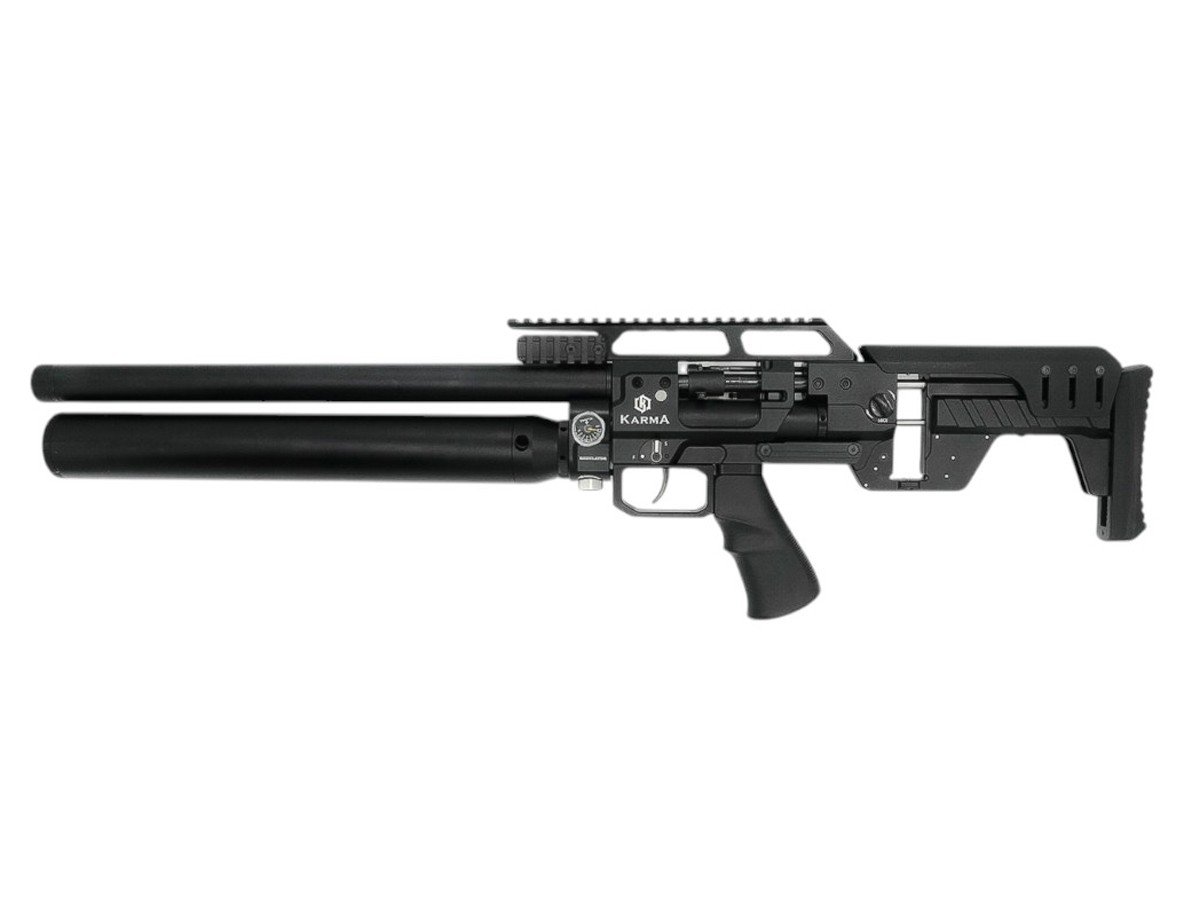
Karma EQ
€500.00
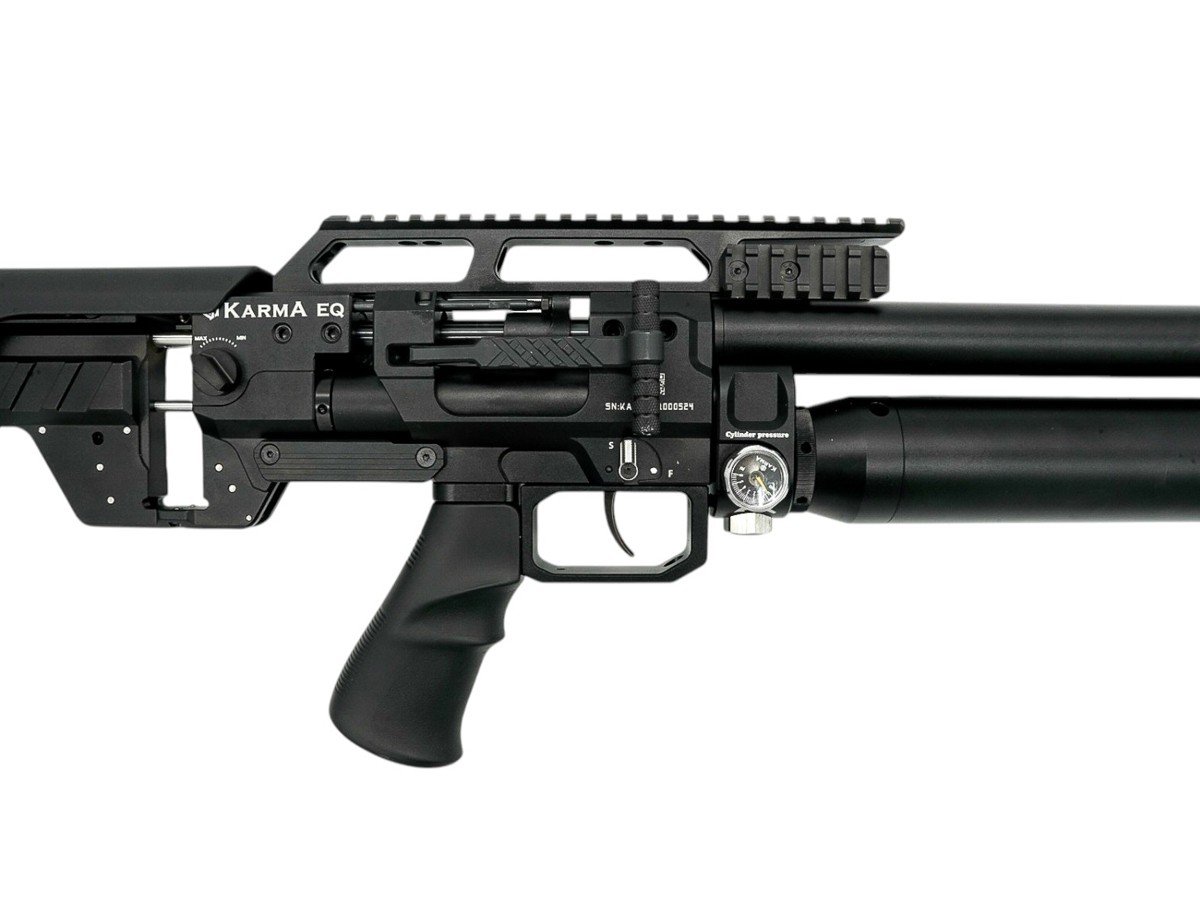
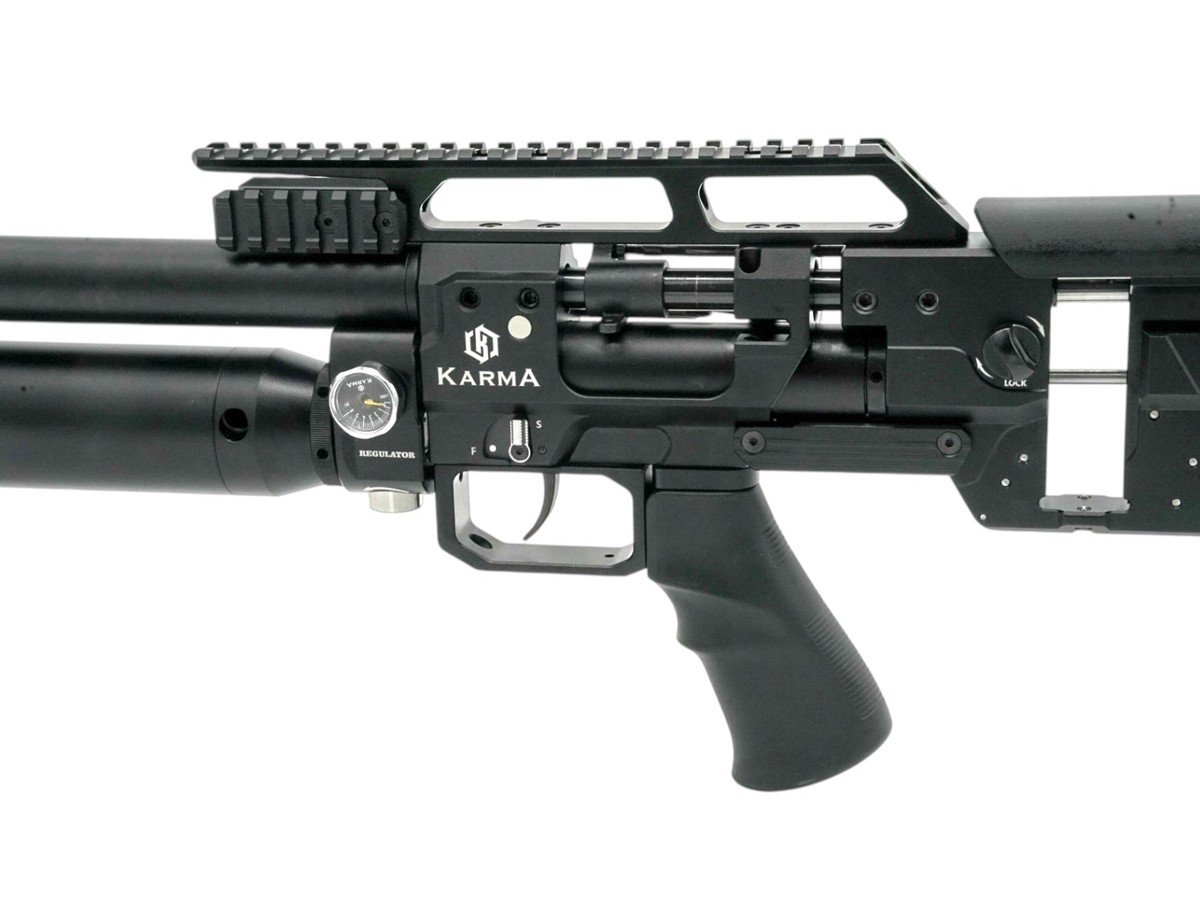
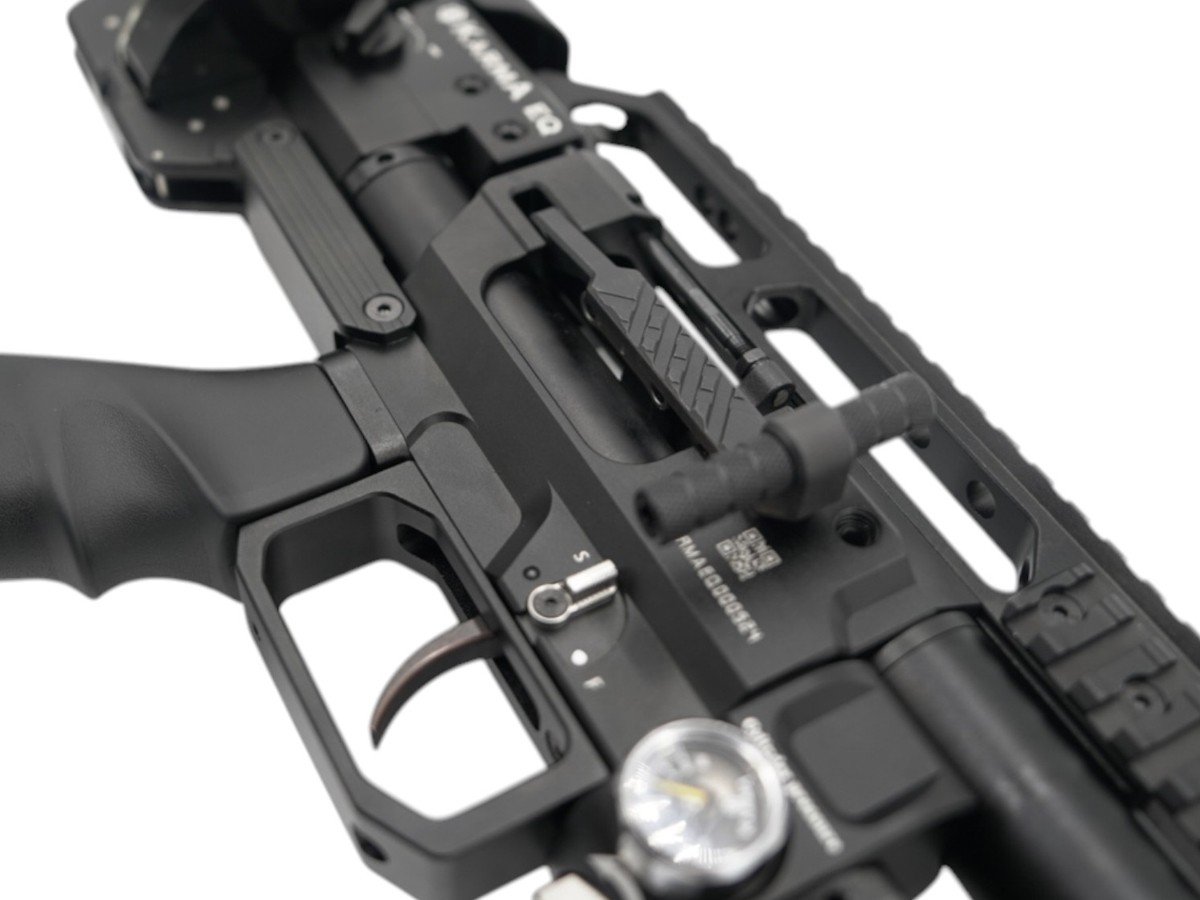
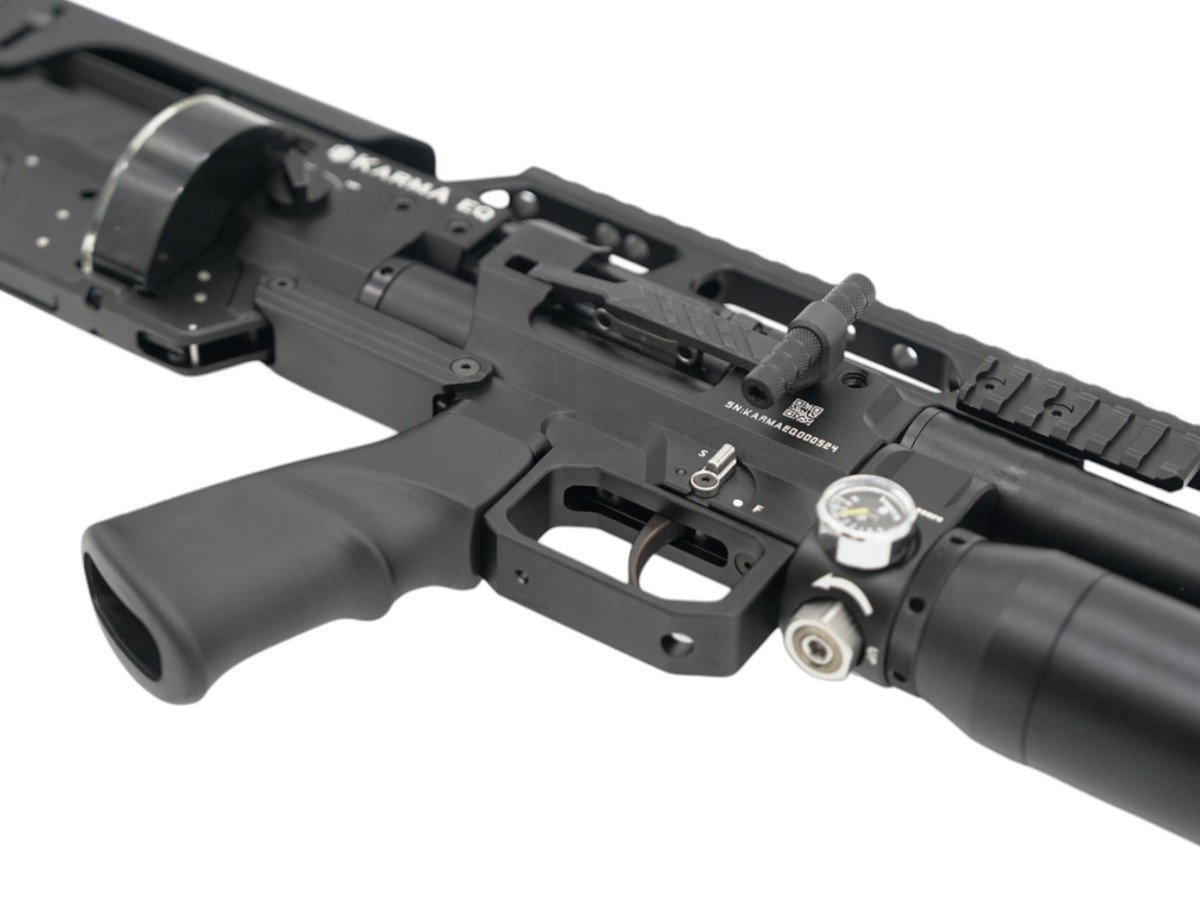
The Karma EQ is a bullpup PCP air rifle with a focus on giving you high performance and flexible features you’d expect to pay more to get. You’ll appreciate the high shot count and precise power you get from the large air cylinder and plenum, so you get the capabilities you need for almost any type of shooting, from target practice, to pesting, hunting, and even competitions.
You’ll enjoy the stability you get from the 8 bolt barrel mounting system and the fully solid barrel system, which has been tested and proven to give you incredible protection from drops and bumps. Plus, you get amazing precision from each shot because the 360 degree radial adjustable transfer port puts smooth and even airflow on the base of the ammo for consistent pressure.
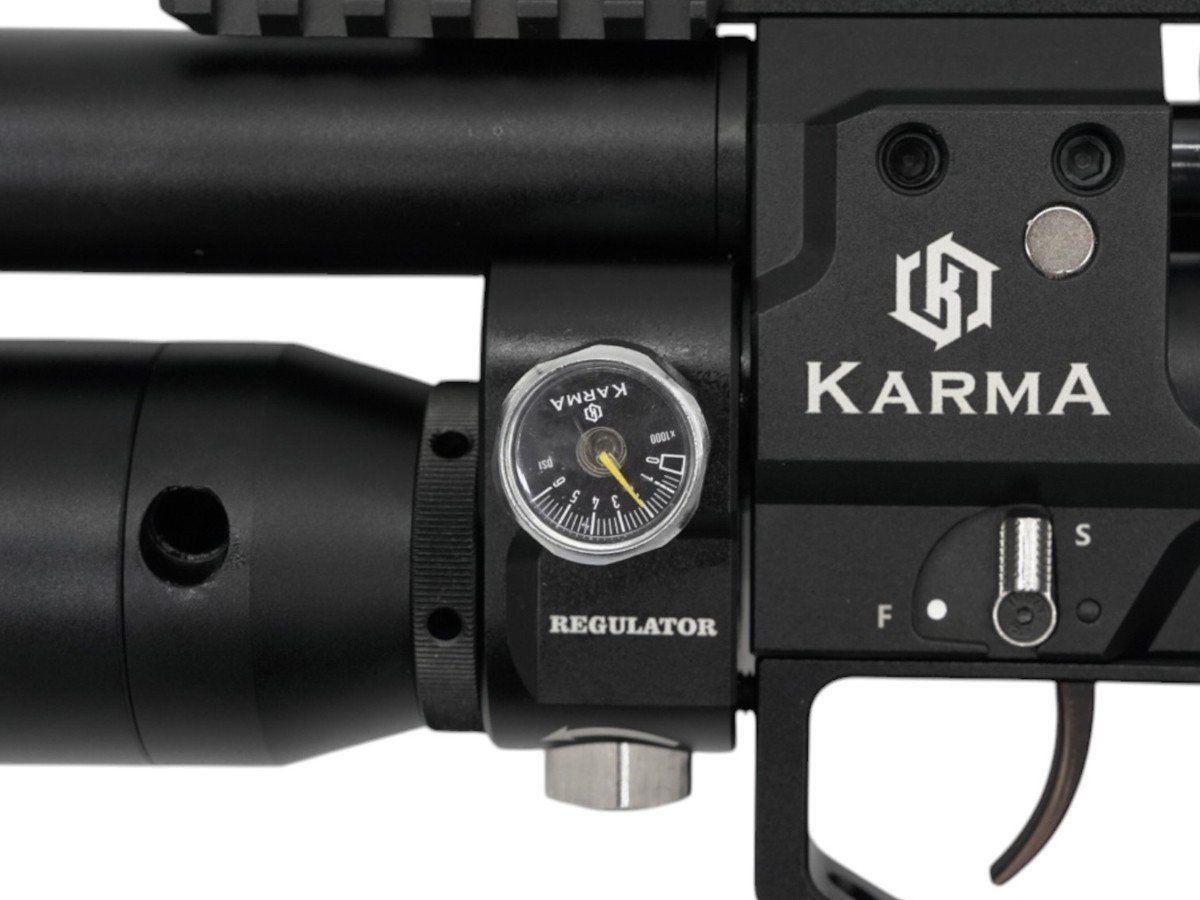
The Karma EQ gives you an easy way to personalize the tune of your air rifle with an externally adjustable hammer spring tensioner to dial in the exact performance you want, plus an externally adjustable regulator to tune for a variety of situations and ammo, and a two stage adjustable trigger for a clean and crisp break that leads to predictable precision.
This air rifle makes it easy to keep an eye on the performance of every shot because it has a regulator pressure gauge, and you’ll also know when it’s time to top up the air tank because it also has a cylinder pressure gauge. It also has a 1/2×20 UNF threaded end on the barrel shroud covered by a thread protector that can be removed if you want to add a moderator to lower the noise.
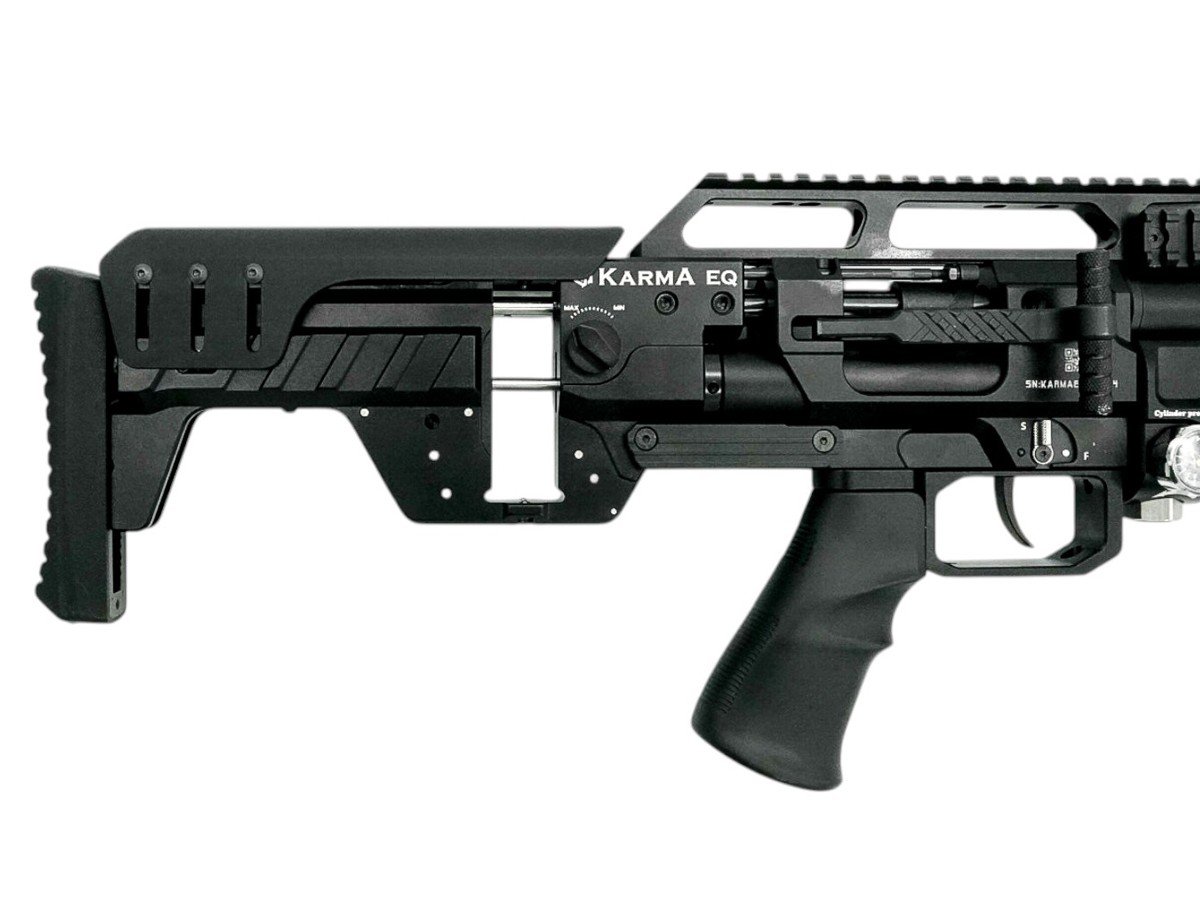
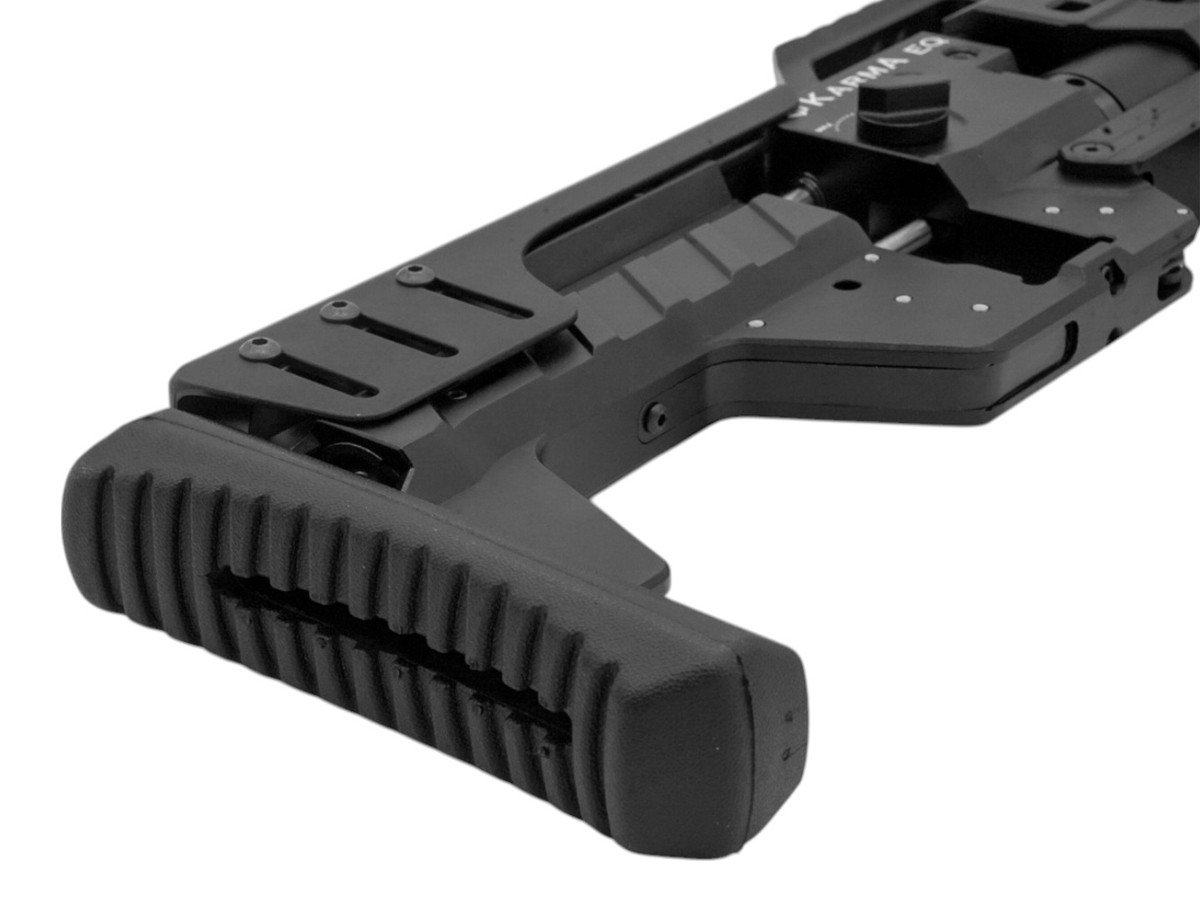
For added precision when aiming, this airgun gives you a Picatinny scope rail that has a 20 MOA angle for better long range accuracy, and you also get Picatinny accessories rails on both sides of the front of the scope rail so you can add accessories like shooting weights, lights, and lasers to get the features you want. The stock gives you comfortable control with the ridged rubber buttpad, a stable hold thanks to the AR style ergonomic pistol grip, and personalized eye alignment because of the height adjustable cheekpiece.
If you want a versatile bullpup PCP air rifle with the power and precision to take your performance to the next level for hunting, pesting, and competitions, get the Karma EQ from Airgun Depot now.
Karma EQ Features:
- Sidelever
- PCP
- 500cc aluminum air cylinder
- 70cc plenum
- Fill pressure: 310 bar/4,496 psi
- Solid barrel system with 360° radial transfer port
- 8-bolt barrel mounting system
- Shrouded barrel
- 1/2×20 UNF threaded muzzle with thread protector
- Average velocity with base tune*: 908 fps (.22), 904 fps (.25), 882 fps (.30)
- Average energy with base tune*: 45 fpe (.22), 61 fpe (.25), 77 fpe (.30)
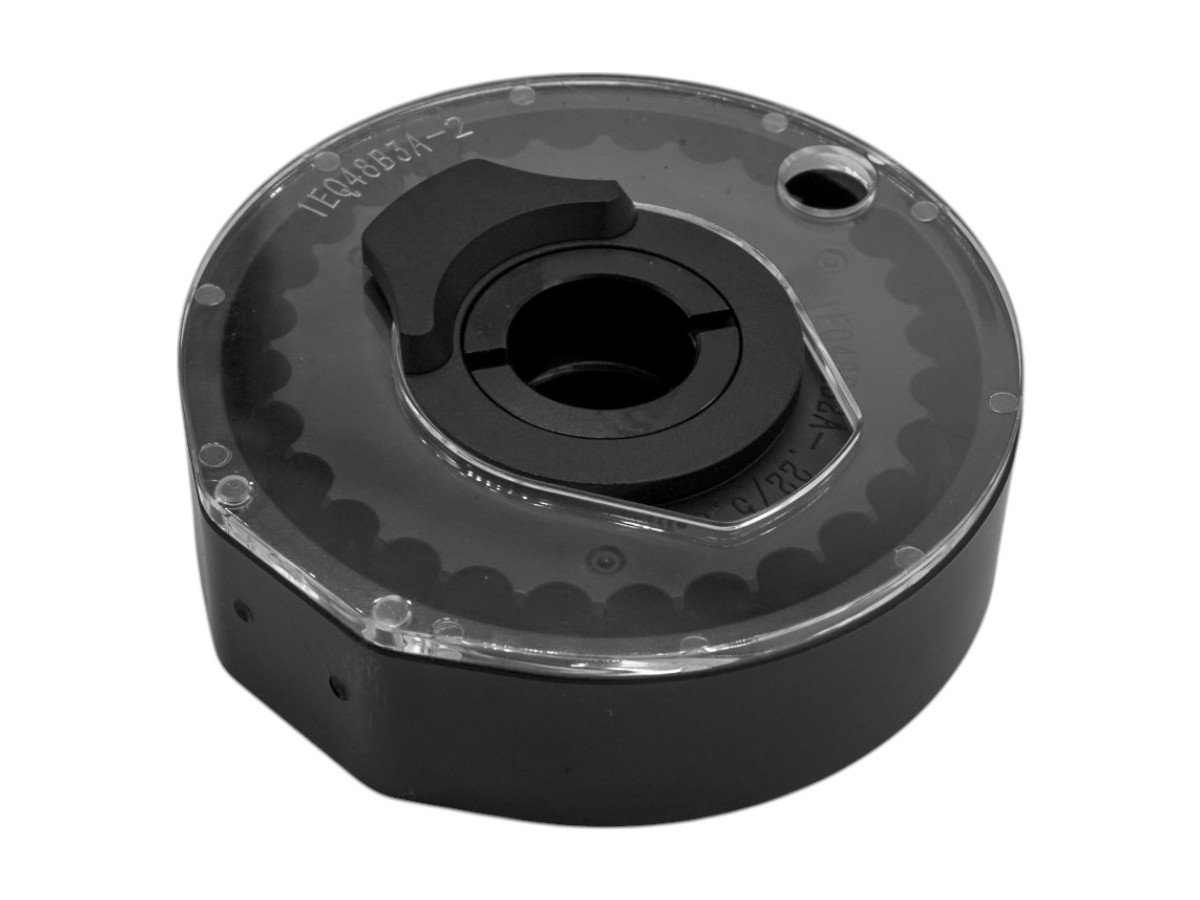
- Magazine capacity: 28 (.22), 26 (.25), 22 (.30)
- Max. shots per fill: 160 (.22), 110 (.25), 50 (.30)
- Shots per fill with base tune: 56 (.22), 78 (.25), 40 (.30)
- Max Energy: 75 FPE (.22), 78 FPE (.25), 102 FPE (.30)
- Barrel twist rate: 1:17.7 (.22, .25), 1:16 (.30)
- Externally-adjustable regulator
- Externally-adjustable hammer spring
- Adjustable transfer port
- Two-stage adjustable trigger
- Two manometers: regulator pressure gauge and cylinder pressure gauge
- AR-style ergonomic pistol grip
- Height-adjustable cheekpiece
- Ridged rubber buttpad
- Picatinny scope rail with 20 MOA cant
- Picatinny accessory rails
- Manual ambidextrous lever safety
- Barrel length: 24″
- Overall length: 33″
- Weight: 9.3 lbs.
* – Base tune measured from 4000 PSI fill at 78°F, 44% humidity, 60’ above sea level. Using: 25gr pellet, 2/7 on HS, transfer port -5 from max (.22), 33.9gr pellet, 1/7 on HS, transfer port max (.25), 44.9gr pellet, 1/7 on HS, transfer port max (.30)
Description
Karma EQ – Precision Audio Equalization System for Refined Sound Control
Introduction to the Karma EQ Audio System
The Karma EQ represents a refined approach to audio equalization, where precision control and balanced sound engineering are brought together within a structured system. This solution has been developed to enhance audio clarity, optimize frequency response, and provide consistent performance across a wide range of listening environments. As a result, it demonstrates how modern equalization technology can improve both technical accuracy and user experience.
To begin with, an equalizer is designed to adjust specific frequency ranges within an audio signal. These adjustments allow users to shape sound output according to preference or environmental conditions. Consequently, low, mid, and high frequencies can be enhanced or reduced to achieve a balanced profile. Because of this capability, equalization plays a critical role in sound optimization.
In addition, the Karma EQ system operates by processing incoming audio signals and redistributing energy across defined frequency bands. Each band represents a portion of the sound spectrum, which can be adjusted independently. Therefore, precise tuning can be achieved without affecting the entire signal. This targeted control supports both subtle refinements and more noticeable adjustments.
Moreover, the system has been engineered to maintain signal integrity during processing. While frequency adjustments are applied, the original audio quality is preserved as much as possible. As a result, distortion is minimized, and clarity is retained. This balance between modification and preservation is essential for achieving high-quality output.
Another important aspect is adaptability. The Karma EQ is designed to function across various audio sources, including digital and analog inputs. Consequently, it can be integrated into multiple setups without requiring significant modifications. Because of this flexibility, the system is suitable for both professional and personal applications.
Furthermore, user interaction has been carefully considered. Control interfaces are structured to allow intuitive adjustments, even for users with limited technical experience. As a result, frequency tuning can be performed efficiently. In addition, visual indicators provide feedback, which helps users understand how changes affect the audio signal.
Consistency is another defining feature of the system. Once settings are configured, the Karma EQ maintains stable performance across repeated use. Therefore, users can rely on predictable output without frequent recalibration. This reliability is particularly important in environments where consistent sound quality is required.
In addition, environmental factors influence how audio is perceived. Room acoustics, speaker placement, and background noise can alter sound characteristics. Consequently, equalization becomes essential for compensating for these variables. The Karma EQ allows adjustments to be made in response to these conditions, which improves overall listening quality.
Another key factor is frequency balance. Without proper equalization, certain frequencies may dominate the audio signal. For example, excessive low frequencies can overwhelm clarity, while insufficient high frequencies may reduce detail. Therefore, balanced adjustment ensures that all elements of the audio spectrum are represented accurately.
Furthermore, the system supports both real-time adjustments and stored configurations. Users can modify settings during playback or save preferred profiles for later use. As a result, flexibility is enhanced, and different listening scenarios can be accommodated. This feature supports both experimentation and consistency.
Durability and build quality also contribute to system reliability. Components are selected to ensure long-term performance under regular use. Consequently, wear is minimized, and functionality is preserved. While all electronic systems require maintenance, high-quality construction supports extended lifespan.
Additionally, energy efficiency is considered within the system design. Power consumption is optimized to ensure stable operation without unnecessary resource use. As a result, the system operates efficiently while maintaining performance standards.
Maintenance requirements are relatively minimal but still important. Regular inspection and proper handling help ensure that the system continues to function as intended. For example, keeping connections clean and avoiding excessive strain on components supports longevity. Because of this, routine care contributes to consistent performance.
Finally, compatibility and regulatory considerations may vary depending on location and application. Therefore, it is important to verify that the system meets relevant standards before integration. Compliance ensures that the system can be used safely and effectively within its intended environment.
In conclusion, the Karma EQ represents a structured and adaptable approach to audio equalization. Through precise frequency control, consistent performance, and user-friendly design, it enhances sound quality across different settings. While its effectiveness depends on proper configuration and environment, it provides a reliable foundation for achieving balanced and refined audio output.
Frequency Band Control, Signal Processing, and Equalization Architecture Karma EQ Air rifle karma eq rifle
The Karma EQ operates through a structured system of frequency band control and signal processing, where audio signals are analyzed, adjusted, and redistributed to achieve a balanced output. While the external interface allows user interaction, the internal architecture determines how effectively these adjustments are applied. Therefore, understanding the processing framework provides deeper insight into how precise sound control is achieved.
To begin with, frequency band segmentation forms the foundation of equalization. The audio spectrum is divided into multiple bands, each representing a specific range of frequencies. Typically, these ranges include low frequencies (bass), mid frequencies (midrange), and high frequencies (treble). As a result, adjustments can be applied selectively rather than globally. Because of this segmentation, users gain more control over how different elements of sound are shaped.
In addition, each frequency band can be adjusted independently. This means that increasing or decreasing one range does not necessarily affect the others. Consequently, fine-tuning becomes possible without compromising the overall balance. For example, bass frequencies can be reduced to prevent distortion, while higher frequencies can be enhanced to improve clarity. Therefore, targeted adjustments lead to more refined audio output.
Moreover, the Karma EQ employs signal processing techniques to maintain audio integrity during adjustments. When a frequency band is modified, the system recalibrates the signal to prevent distortion or imbalance. As a result, the output remains stable even when significant changes are applied. This ensures that clarity is preserved while flexibility is maintained.
Another important aspect is gain control within each frequency band. Gain refers to the level of amplification applied to a specific range. By adjusting gain, users can increase or decrease the prominence of certain frequencies. Consequently, sound characteristics can be shaped according to preference or environmental needs. However, excessive gain may introduce distortion, so careful calibration is essential.
Furthermore, filter design plays a critical role in how frequencies are adjusted. Filters are used to isolate specific frequency ranges and control their intensity. Common filter types include low-pass, high-pass, and band-pass filters. Each type serves a different purpose in shaping the signal. As a result, the system can target precise areas of the spectrum without affecting unrelated frequencies.
Transitioning to signal flow, the Karma EQ processes audio in a sequential manner. The incoming signal is first analyzed and then passed through the frequency bands for adjustment. After processing, the signal is reconstructed and delivered as output. Because of this structured flow, each stage contributes to the final result without disrupting the overall signal path.
In addition, real-time processing enables immediate feedback during adjustments. Changes made to frequency bands are reflected instantly in the output. Consequently, users can evaluate the impact of their adjustments as they occur. This responsiveness supports more accurate tuning and reduces the need for repeated calibration.
Another key feature is dynamic range management. Audio signals often contain variations in intensity across different frequencies. The Karma EQ manages these variations to prevent certain elements from overpowering others. As a result, the overall sound remains balanced. While extreme differences can still occur, controlled processing helps maintain equilibrium.
Furthermore, phase alignment is considered within the system architecture. When frequencies are adjusted, phase relationships between different parts of the signal can shift. If not managed properly, this can lead to inconsistencies in sound perception. Therefore, the system is designed to maintain alignment where possible. As a result, coherence is preserved across the audio spectrum.
Noise reduction is also integrated into the processing system. Unwanted background noise can interfere with audio clarity, particularly in lower frequency ranges. Consequently, filtering techniques are applied to minimize these disturbances. Because of this, the output remains cleaner and more defined.
In addition, the system supports both manual and preset configurations. Users can adjust frequency bands individually or select predefined profiles that correspond to common listening scenarios. As a result, flexibility is enhanced, and setup time is reduced. While manual adjustments provide precision, presets offer convenience.
Another important consideration is compatibility with different audio sources. The Karma EQ is designed to process signals from various inputs, including digital and analog formats. Therefore, it can be integrated into multiple setups without requiring significant changes. This adaptability ensures that the system remains versatile across different applications.
Moreover, processing efficiency is maintained through optimized internal architecture. The system is designed to handle complex adjustments without introducing latency. As a result, audio playback remains synchronized with minimal delay. This is particularly important in real-time environments where timing is critical.
Finally, stability across repeated use is ensured through consistent signal processing. Once settings are configured, the system applies them reliably without variation. Consequently, users can expect the same output each time the system is used. This consistency supports both professional and personal applications.
In conclusion, the Karma EQ achieves precise sound control through a combination of frequency band segmentation, advanced signal processing, and efficient system architecture. While users interact with the interface to adjust settings, the internal framework ensures that these adjustments are applied accurately and consistently. As a result, the system delivers balanced and refined audio output across a wide range of conditions.
Design, Interface, and User Experience Optimization best EQ system for sound clarity
The Karma EQ is not only defined by its internal signal processing capabilities but also by its external design and user interaction. While performance depends on how accurately frequencies are controlled, usability is determined by how easily those controls can be accessed and adjusted. Therefore, the relationship between design and functionality becomes essential when evaluating the overall system.
To begin with, the structural design of the Karma EQ emphasizes durability and stability. Materials are selected to ensure that the system can withstand continuous use without compromising performance. As a result, the unit maintains its integrity over time. While all electronic systems experience gradual wear, reinforced construction helps extend operational lifespan karma eq. Because of this, reliability is supported in both professional and personal environments.
In addition, the layout of the interface has been carefully structured to enhance usability. Controls are arranged logically, which allows users to navigate the system without confusion. Consequently, adjustments can be made efficiently. This intuitive design reduces the learning curve and enables both beginners and experienced users to interact with the system effectively.
Moreover, control elements are designed for precision. Sliders, knobs, or digital interfaces are calibrated to allow fine adjustments across frequency bands. As a result, users can make subtle changes without overshooting desired levels. This level of control is essential for achieving balanced sound output. While broader adjustments are possible, precision ensures accuracy.
Another important aspect is visual feedback. The Karma EQ incorporates indicators that display frequency levels and system status. These visual elements help users understand how adjustments are affecting the audio signal. Consequently, real-time feedback supports more informed decision-making. Because of this, users can refine their settings with greater confidence.
Furthermore, the system supports both manual control and preset configurations. Users can customize frequency bands individually or select predefined profiles that correspond to common audio scenarios. As a result, flexibility is enhanced while convenience is maintained. Presets allow quick adjustments, while manual controls provide deeper customization.
Ergonomics also play a significant role in user interaction. The interface is designed to minimize strain during extended use. Controls are positioned within comfortable reach, and spacing between elements prevents accidental adjustments. Consequently, operation remains smooth and controlled. While compact designs save space, proper spacing ensures usability is not compromised karma eq.
In addition, portability and form factor contribute to versatility. Depending on the configuration, the Karma EQ can be integrated into various setups without requiring extensive modifications. As a result, it can be used in both fixed and mobile environments. This adaptability enhances its practical application across different use cases.
Another key factor is connectivity. The system is designed to support multiple input and output options, which allows integration with different audio devices. Consequently, compatibility is maintained across a wide range of systems. While connection types may vary, the goal is to ensure seamless signal flow between components.
Furthermore, responsiveness is a defining characteristic of the user experience. Adjustments made through the interface are reflected immediately in the audio output. As a result, users can hear the impact of their changes in real time. This immediate feedback supports accurate tuning and reduces the need for repeated adjustments.
Environmental adaptability is also considered in the design. The system is built to operate under varying conditions, including changes in temperature and humidity. As a result, performance remains stable across different environments. While extreme conditions may still affect electronic components, durable design helps mitigate these effects karma eq.
Maintenance accessibility is another important feature. Components that may require inspection or cleaning are positioned for easy access. Consequently, routine maintenance can be performed without complex procedures. This simplifies upkeep and supports long-term reliability. Because of this, users can maintain performance with minimal effort karma eq.
In addition, energy efficiency is integrated into the system design. Power consumption is optimized to ensure stable operation without unnecessary resource use. As a result, the system remains efficient while delivering consistent performance. This balance supports both sustainability and practicality.
User experience is further enhanced by the integration of all design elements. Structural durability, intuitive controls, and responsive feedback work together to create a cohesive system. Consequently, the Karma EQ functions as a unified platform rather than a collection of separate components. This integration improves both usability and performance karma eq.
Safety considerations are also reflected in the design. Stable construction and reliable controls reduce the likelihood of unintended adjustments or operational issues. As a result, the system can be used confidently in various environments. While proper handling is always required, design features contribute to safe operation karma eq.
In conclusion, the Karma EQ achieves a balance between advanced functionality and user-friendly design. While its internal architecture ensures precise sound control, its external interface allows those controls to be applied effectively. Through intuitive layout, responsive feedback, and durable construction, the system provides a seamless user experience that supports both accuracy and convenience karma eq.
Performance Optimization, Sound Customization, and Real-World Application Karma EQ audio equalizer review
The Karma EQ is designed not only to adjust sound but also to optimize overall audio performance across different environments and use cases. While internal processing ensures accurate signal control, real-world effectiveness depends on how well the system adapts to varying conditions. Therefore, performance optimization and customization play a central role in defining its practical value.
To begin with, sound optimization starts with understanding the listening environment. Every space introduces unique acoustic characteristics, including reflections, absorption, and background noise. As a result, the same audio signal can sound different depending on the setting. Because of this, equalization becomes essential for compensating for these environmental variations v.
In addition, the Karma EQ allows users to fine-tune sound output according to specific needs. Frequency bands can be adjusted to enhance clarity, reduce unwanted resonance, or balance tonal distribution. Consequently, audio can be tailored to match both the environment and the listener’s preference. While default settings may provide a baseline, customization enhances precision karma eq.
Moreover, performance optimization often involves balancing different frequency ranges. Low frequencies contribute depth, mid frequencies provide presence, and high frequencies add detail. However, imbalance in any of these areas can affect overall sound quality. Therefore, careful adjustment ensures that no single range dominates excessively. As a result, the output remains clear and well-defined.
Another important aspect is dynamic response. Audio signals often vary in intensity, and maintaining clarity across these variations is essential. The Karma EQ helps manage these changes by adjusting frequency levels in a controlled manner. Consequently, both subtle and intense audio elements remain audible without distortion. This contributes to a more balanced listening experience karma eq.
Furthermore, real-time customization enhances usability. Adjustments can be made during playback, allowing users to respond immediately to changes in sound perception. As a result, fine-tuning becomes more efficient. This capability is particularly useful in environments where conditions may shift, such as live setups or dynamic listening spaces.
Reviews
There are no reviews yet.